
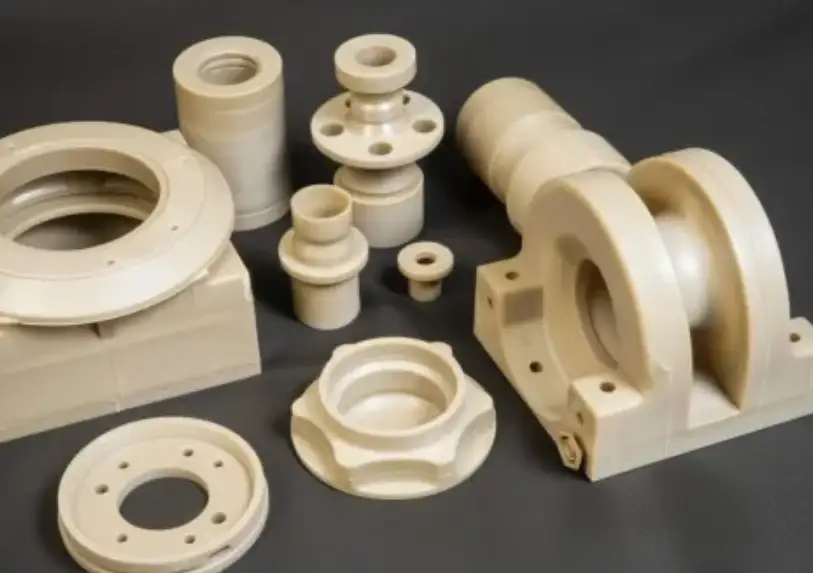

Polyether Ether Ketone (PEEK) has become one of the most in-demand engineering plastics in modern manufacturing. Known for its exceptional strength, chemical resistance, and thermal stability, PEEK is the material of choice for industries that require performance far beyond what conventional plastics can deliver.
PEEK injection molding allows manufacturers to produce complex, high-precision components that can withstand extreme conditions—making it widely used in aerospace, automotive, medical, semiconductor, and industrial equipment.
This article explores what PEEK injection molding is, why it matters, its benefits, applications, and considerations when selecting a PEEK molding partner.
What Is PEEK Injection Molding?
PEEK injection molding is the process of shaping PEEK thermoplastic pellets into customized parts using high-temperature, high-pressure molding equipment. Compared to standard plastics like ABS or PP, PEEK requires significantly higher processing temperatures—meaning only specialised facilities can mold it correctly.
PEEK’s unique properties include:
- Extremely high heat resistance (continuous use temperatures up to 260°C)
- Outstanding mechanical strength
- Exceptional chemical and wear resistance
- Low moisture absorption
- Superior dimensional stability
- Inherent flame retardancy
- Biocompatibility (medical-grade PEEK)
These characteristics make PEEK one of the highest-performing thermoplastics on the market.
Why Choose PEEK for Injection Molding?
PEEK offers performance advantages that go far beyond standard polymer materials. Its properties make it ideal for replacing metals in many demanding applications.
1. High Strength and Stiffness
PEEK has a strength-to-weight ratio similar to aluminium, allowing manufacturers to create lighter components without sacrificing performance. This makes it especially valuable in aerospace, automotive, and industrial machinery.
2. Exceptional Heat Resistance
Few plastics can maintain mechanical integrity at high temperatures. PEEK performs reliably at temperatures up to 260°C, making it suitable for engine compartments, medical sterilization, and high-heat industrial environments.
3. Chemical & Corrosion Resistance
PEEK tolerates exposure to harsh chemicals, fuels, oils, solvents, and sterilization agents. It will not degrade in corrosive environments, giving it a clear advantage over metals and other plastics.
4. Superior Wear & Friction Performance
PEEK provides excellent wear resistance and a low coefficient of friction. When blended with carbon, graphite, or PTFE, it becomes an ideal material for gears, bearings, and sliding components.
5. Electrical Insulation Properties
PEEK offers stable dielectric strength even under high heat and humidity, which is why it is widely used in electrical connectors, insulators, and semiconductor equipment.
6. Lightweight and Metal-Replacement Capabilities
Because PEEK matches metals in performance, it allows engineers to reduce weight, simplify designs, and lower production costs while achieving high durability.
Applications of PEEK Injection Molding
Due to its outstanding properties, PEEK is used in high-performance sectors where reliability and safety are critical.
1. Aerospace and Aviation
PEEK parts are used in:
- Aircraft connectors
- Electrical insulation components
- Structural brackets
- Engine components exposed to high heat
Its lightweight and flame-retardant characteristics make it a preferred material for next-generation aircraft.
2. Automotive & EV Manufacturing
PEEK injection molding supports both traditional combustion engines and electric vehicle development.
Typical applications include:
- Under-the-hood components
- High-temperature connectors
- Fuel system parts
- Sensor housings
- Battery insulation elements
PEEK’s reliability improves vehicle safety, thermal management, and longevity.
3. Medical Devices
Medical-grade PEEK is biocompatible and sterilizable, making it suitable for:
- Surgical instruments
- Implants
- Dental healing caps
- Endoscopic components
- Orthopedic devices
Because it is lighter than metal and more comfortable for patients, PEEK is increasingly used to replace titanium in certain medical applications.
4. Semiconductor Manufacturing
PEEK excels in cleanroom environments requiring chemical resistance and dimensional accuracy.
Used for:
- Wafer handling components
- Chip manufacturing fixtures
- Chemical-resistant housings
- Precision semiconductor tooling
Its low outgassing and high purity meet semiconductor production standards.
5. Industrial Equipment
PEEK performs well in industrial machinery due to its strength and durability.
Common components include:
- Bearings
- Pump and valve parts
- Seals and gaskets
- High-wear gears
- Automation equipment
Its ability to handle friction and wear extends component life.
PEEK Injection Molding Process: Key Considerations
Molding PEEK is not the same as molding standard plastics. It requires specialised equipment, expertise, and strict temperature control.
1. High Processing Temperatures
PEEK must be melted at around 370–420°C. Only advanced injection molding machines with high-temperature barrels, nozzles, and hot runners can handle these conditions.
2. Strict Mold Temperature Control
Mold temperatures typically range from 160–200°C. This ensures proper crystallinity, mechanical strength, and dimensional stability.
3. Drying Requirements
PEEK absorbs moisture easily. Pellets must be dried at 150°C for several hours before molding to prevent defects.
4. Precision Tooling
Tooling must withstand high thermal and mechanical stresses. High-precision steel molds are required to achieve tight tolerances.
5. Consistent Cooling
Proper cooling is essential for achieving dimensional accuracy and preventing warping or internal stress.
Choosing the right partner with PEEK-specific capabilities is crucial.
How to Choose a Reliable PEEK Injection Molding Manufacturer
Not all manufacturers have the expertise or equipment to process high-performance engineering plastics. When selecting a PEEK molding supplier, consider the following:
1. High-Temperature Molding Equipment
Ensure the factory uses injection machines capable of handling PEEK’s extreme melt temperature requirements.
2. Experience With PEEK and High-Performance Resins
Companies experienced with PEEK, PSU, PPSU, LCP, and PPS are more reliable partners.
3. Advanced Mold Manufacturing Capabilities
Look for in-house mold design, CNC machining, EDM, and polishing capabilities to ensure precision and efficiency.
4. Quality Control & Material Traceability
A professional PEEK supplier should provide:
- Material certifications
- Dimensional inspection reports
- Process documentation
- Surface and mechanical testing
5. Ability to Scale Production
Choose a manufacturer capable of producing prototypes, low-volume runs, and mass-production batches.
Conclusion: Why PEEK Injection Molding Matters
PEEK injection molding enables the production of ultra-high-performance parts that surpass traditional plastics and even rival metals. With unmatched strength, temperature resistance, chemical stability, and dimensional accuracy, PEEK is essential for applications that demand reliability in extreme environments.
As industries continue to push the limits of engineering and innovation, PEEK remains one of the most valuable materials for advanced manufacturing.
If you need strong, lightweight, precision-engineered components, PEEK injection molding is a smart, future-focused solution.